コレクション: Sliding Puzzles
In a sliding puzzle the pieces never leave the frame. You move them past each other into a target arrangement, and the constraint is not which piece goes where but the order you are allowed to move them in.
That makes them completely different to solve from packing or assembly puzzles. You cannot brute-force a sliding puzzle by trying pieces in a hole. You have to plan a sequence, and most sequences dead-end.
The three in this collection
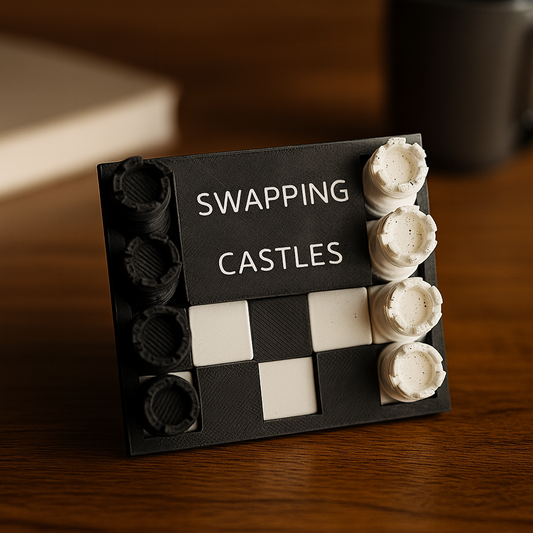
Slidely Trivial is flat, cheap and deceptively stubborn - a good first sliding puzzle. Swapping Castles is the classic swap problem: get two sets of pieces to trade places in a space that barely fits them.
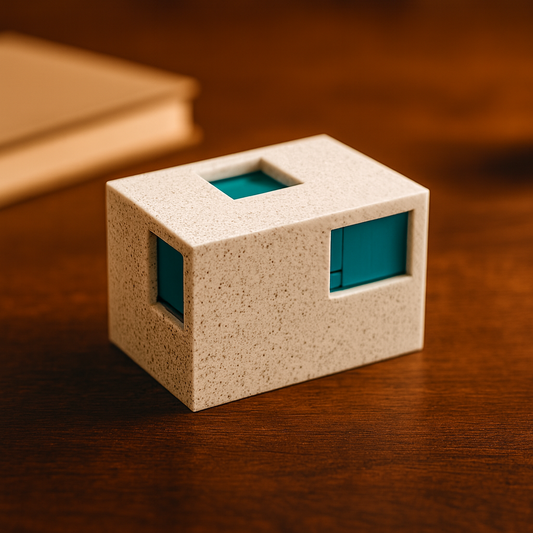
MINIMA Slider by Frederic Boucher is the serious one. Five pieces, one box, exactly one solution, and it had its world debut at Greg Puzzles.
Best for
Solvers who like planning several moves ahead rather than fiddling. Commuters and travellers - nothing falls out on a train. People who enjoyed Rush Hour or Klotski as kids and want an adult version.
Frequently Asked Questions
What is a sliding block puzzle?
A puzzle where pieces slide within a confined frame and cannot be lifted out. You reach the goal position by moving pieces around each other in the right order.
Are sliding puzzles good for travel?
Yes. The pieces stay in the frame, so there is nothing to lose in a bag or down the side of a seat.
How is this different from a packing puzzle?
A packing puzzle starts with loose pieces you fit into a space. A sliding puzzle starts assembled and asks you to rearrange it without removing anything.
Which one should I start with?
Slidely Trivial. It teaches the move-planning habit at a low price before you take on MINIMA Slider.