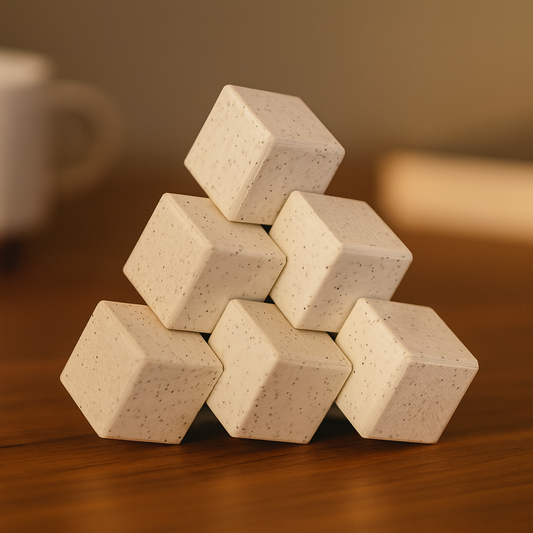
Collection: Geometry Puzzles
These are puzzles where the difficulty comes from a geometric property rather than a mechanism. Symmetry, dissection, tiling, area. Nothing hides inside them. Everything is visible from the start, which is exactly why they are hard.
A geometry puzzle usually has very few pieces. Three, four, five. That is not generosity - it means every piece matters and there is nowhere to hide a lucky guess.
What is in here
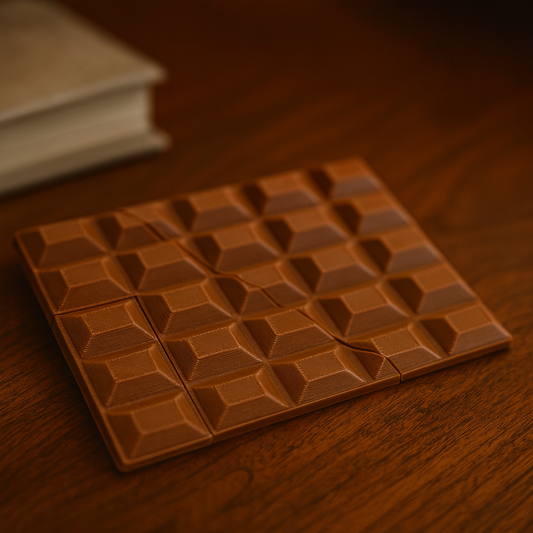
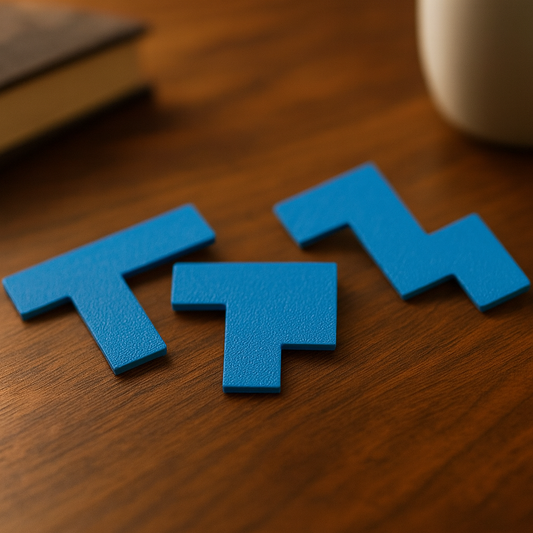
Shinobi asks for a symmetrical shape from three flat pieces, and most solvers spend over an hour on the easy solution. Infinity Chocolate is a dissection illusion where rearranging the pieces appears to create a square out of nothing.
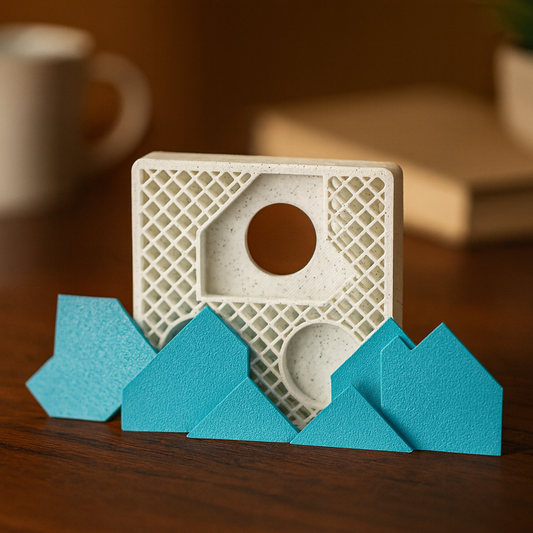
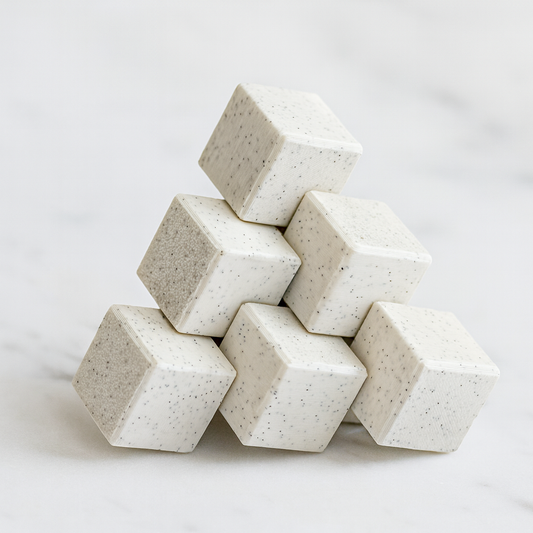
Three-Piece Block by Stewart Coffin builds a perfect pyramid from three solid pieces. Conga Line, Trivial and Wild West are tray puzzles where the tiling has to come out exact.
Best for
Maths teachers and people who enjoyed geometry at school and never got to use it again. Designers and architects who respond to clean shapes. Solvers who prefer an elegant three-piece problem to a brute-force twelve-piece one.
Frequently Asked Questions
What counts as a geometry puzzle?
One where the challenge comes from a geometric relationship - symmetry, dissection, tiling, area conservation - rather than from a hidden mechanism or an interlocking structure.
Are these good for teaching?
Yes. Dissection and tiling puzzles make abstract geometry physical, and Infinity Chocolate in particular is a memorable way to show that a convincing area illusion can hide a real error.
Do few pieces mean easy?
No. Three-piece puzzles are often harder than twelve-piece ones, because there are so few arrangements that the correct one has to be genuinely counter-intuitive.
Which is the hardest here?
Shinobi. Three flat pieces, and there are two solutions - most people never find the second.