Collection: TIC Puzzles
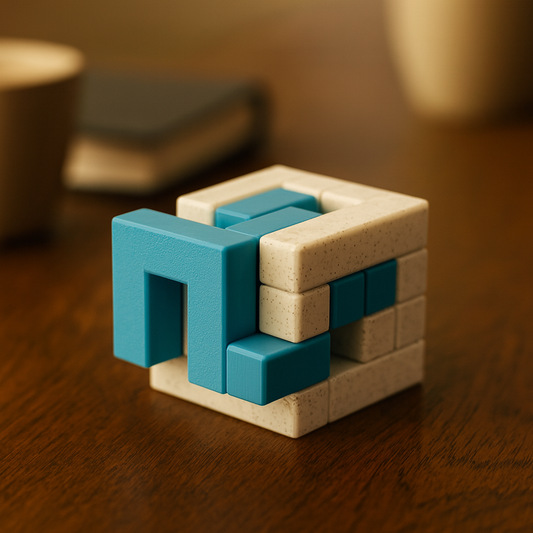
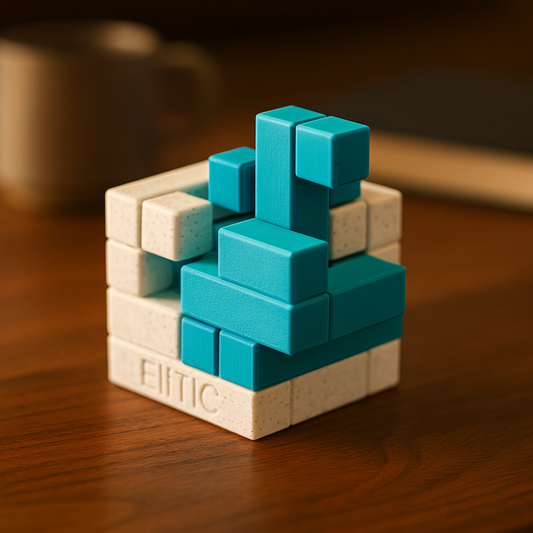
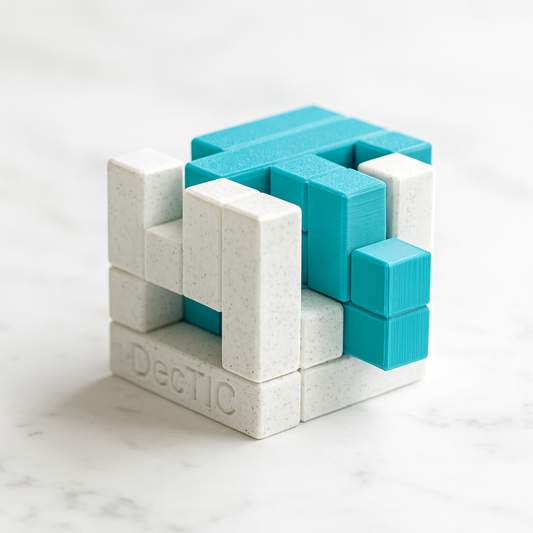
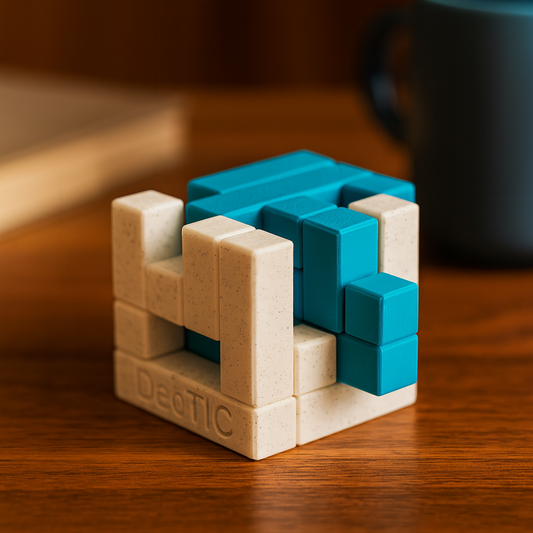
Turning Interlocking Cube puzzles (TIC puzzles) are 3D-printed mechanical brain teasers in which interlocking pieces must be rotated and disassembled - and then reassembled - into a perfect cube, following a unique sequence specific to each design.
Best for: adults who enjoy spatial reasoning, sequential thinking, and the meditative satisfaction of learning a puzzle's unique movement logic - from Medium 3-piece TICs to Expert 7-piece challenges.
TIC Puzzles are Turning Interlocking Cubes, pioneered by Andrew Crowell. Although they all fit inside a cube, the different interactions between the pieces makes them a beautiful ritual of movement, sequences and spatial imagination. While different TICs may look similar, they all have their own unique solutions, different tricks and characteristics waiting for you to learn them.
Where to start
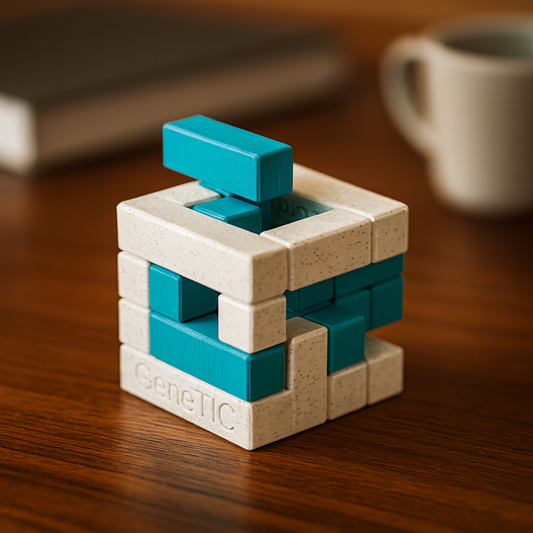
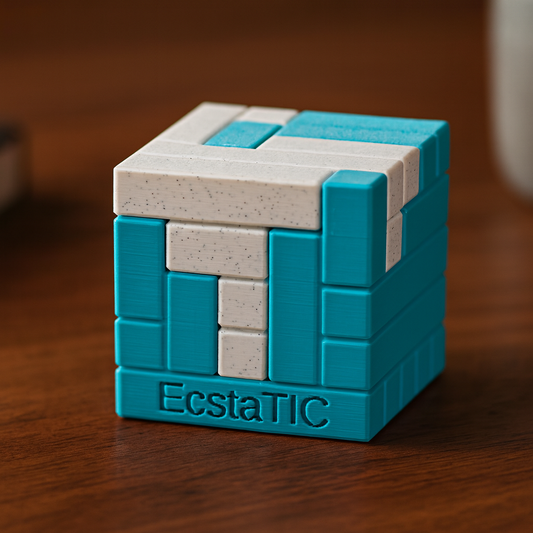
Start with EcstaTIC. It only has 2 pieces - it will help you understand the idea of turning interlocking before anything else. 3-piece TICs are already much more complicated. 5-piece TICs like GeneTIC come much later. From there, progressively move towards the harder ones, or get a mix of various difficulties. The experience varies per solver!
About the designer
Every TIC puzzle in this collection is designed by Andrew Crowell - one of the most respected names in mechanical puzzle design. His work on the TIC format has built a dedicated following of collectors and solvers around the world.
Frequently Asked Questions
What is a TIC puzzle?
A TIC puzzle - short for Turning Interlocking Cube - is a mechanical 3D-printed puzzle where interlocking pieces must be rotated in a specific sequence to assemble or disassemble a cube. The format was pioneered by Andrew Crowell.
How hard are TIC puzzles?
TIC puzzles range from Medium (3-piece designs, 30-60 min) to Expert (7-piece designs, 4+ hours). Each puzzle has a completely unique solution, so solving one does not make the next easier.
What is the best TIC puzzle for beginners?
Start with a 3-piece Medium TIC such as TriTIC, TreTIC, or ThreeTIC. These introduce the rotation logic without overwhelming new solvers.